
Cow-calf producers should embrace sexual dimorphism over so-called “heifer bulls.” Sexual dimorphism is the condition where males and females of the same species exhibit distinct physical differences beyond their reproductive organs. The concept of a so-called “heifer bull” is unnecessary and potentially harmful.
The beef industry’s relentless, long-time selection for more and more growth has favored growth hormones over sex hormones. This creates a population of bulls and females that are shaped and sized similarly. The bulls become slightly feminine, and the females become slightly masculine in appearance. Sexual monomorphism changes the physiology of mammals.
On the other hand, when selecting for optimal levels of growth, milk, muscle, etc., instead of maximum levels, sexual dimorphism occurs. This is a natural mammalian state, where bulls and females look nothing alike. By producing more sex hormones than growth hormones, bulls become masculine and muscular. Females with optimized estrogen flow are full-bodied, easy-fleshing, and shaped functionally.
Populations of cattle where sexual dimorphism is fully realized will naturally be easy calving and genetically fertile. If none of this makes sense, observe a herd of bison, antelope, or deer at breeding season. There’s no team talk before the males head out to breed females. There’s no splitting up the alpha males from the beta males for the purpose of going easy on the virgins.
If your cowherd is functional and if your bulls were selected for optimum instead of maximum levels, your heifers can be safely bred to the same bulls you use on your cows.
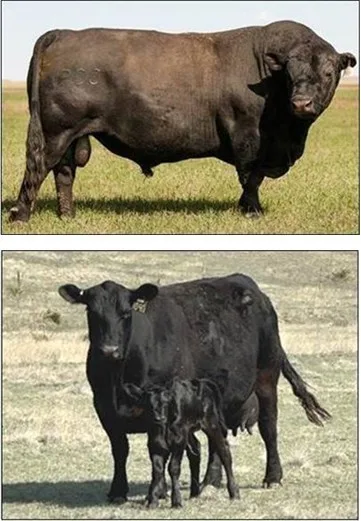
One of my favorite PCC® bulls is Daily Double (pictured above). He is an extremely masculine bull with exceptional calving ease. The full-bodied cow pictured below Daily Double is his granddam at 12 years of age. Notice her fleshing ability and udder conformation. These two pictures do a perfect job of depicting sexual dimorphism.
Quote Worth Re-Quoting
“Common sense is in spite of – not the result of – education.” ~ Victor Hugo
Share this Post