by Kit Pharo | Oct 21, 2026 | PCC® Update, Quote Worth Re-Quoting
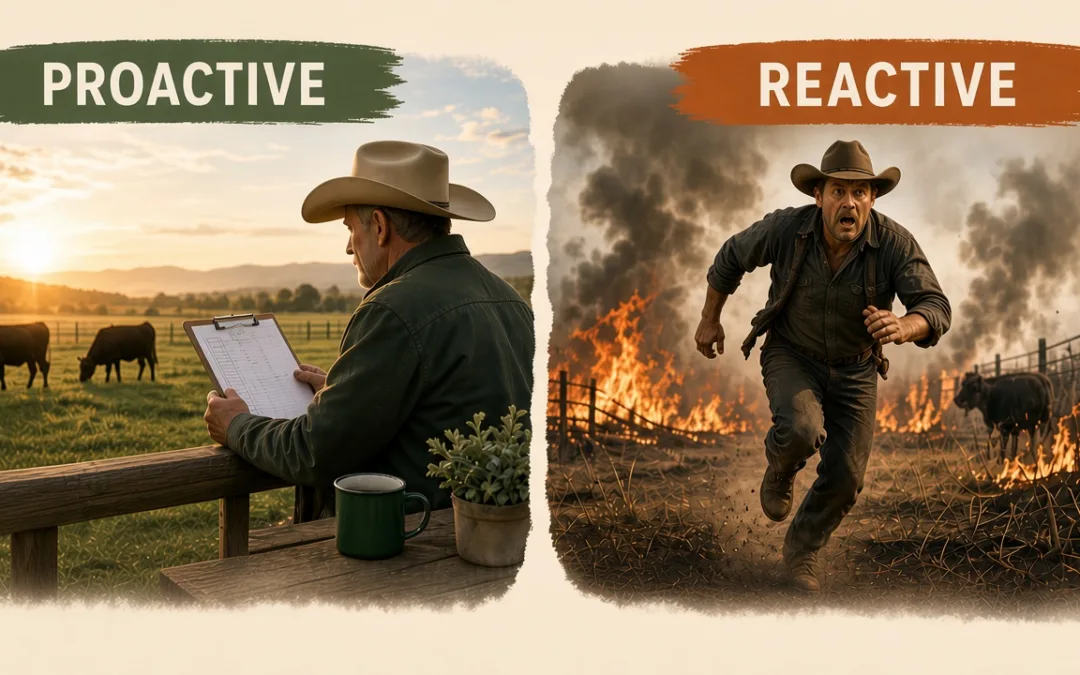
It is always much better to be proactive than reactive. The difference between being proactive and reactive can be compared to the difference between fire prevention and frantically running around putting out fires every day. Being proactive requires us to think and...

by Kit Pharo | Oct 14, 2026 | PCC® Update, Quote Worth Re-Quoting
Several people responded to last week’s PCC Update by asking, “How can you look at a cow’s neck and know that she has missed having a calf or two?” What I am looking for is the presence or absence of a ewe neck. In cattle, a ewe neck refers to a thin, concave neck,...
by Kit Pharo | Oct 14, 2026 | PCC® Update, Quote Worth Re-Quoting
If success was easy, everyone would be remarkably successful. Unfortunately, very few people can be classified as remarkably successful. Success, however, does appear to be easy for some people. If you look closer, you will discover that those people make things...
by PJ Budler | Oct 7, 2026 | PCC® Update, Quote Worth Re-Quoting
The advent of Estimated Progeny Differences (EPDs) had an unexpected effect: it leveled the playing field. Data let producers – new and established, small and large – compete on equal terms. For the first time, cattle could be compared across herds and environments....
by PJ Budler | Sep 30, 2026 | PCC® Update, Quote Worth Re-Quoting
Several breeding philosophies address type and kind in the commercial cow-calf industry. All can be applied in multi-sire or single-sire mating. Crossbreeding with complementarity can optimize heterosis and performance, but it reduces predictability. Gains in weight,...
by Kit Pharo | Sep 23, 2026 | PCC® Update, Quote Worth Re-Quoting
We used a couple of young virgin bulls on our yearling heifers here at PCC® Headquarters – an Angus and a Red Angus. They were turned out for a 45-day breeding season around the first of August. Both bulls gained weight – even under severe drought conditions. It is...