
The global livestock industry is fascinatingly different in many ways, yet remarkably similar in others.
My first stop was Ireland for the annual Tullamore Show and the European Hereford Conference in Kilkenny. The Tullamore Show is a one-day event featuring all livestock breeds and agricultural trade stands. Almost entirely temporary construction, it attracts around 60,000 visitors.
The European Hereford Conference, held every four years, brings together breeders from 25 countries. It was interesting to hear about Ireland’s full beef traceability and the fact that every carcass is DNA-tested, making their carcass EBVs particularly compelling. While the U.S. focuses on marbling, Ireland prioritizes juiciness, tenderness, and flavor in a system that is almost entirely grass-fed.
Next was Jersey, home to 4,500 Jersey cattle. After a couple of client meetings, a 14-minute flight took me to Guernsey, which has 2,500 Guernsey cattle and some of the most stunning beaches and ocean views. Both islands have placed strong emphasis on food security, particularly milk and potatoes.
Ireland, Guernsey, Jersey, and England are currently drier and hotter than at any time in recorded history.
Scotland was the highlight! Driving through the Highlands was breathtaking, with heather and foxgloves in full bloom. I was invited to the 150th anniversary of the Aberdeen-Angus Herd Book at Ballindalloch Castle. The Ballindalloch herd has appeared in every edition of the book.
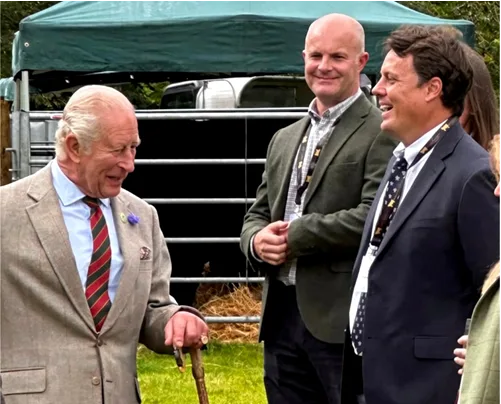
King Charles III, patron of the Aberdeen-Angus Society, was present to unveil the 150th edition. I had the honor of meeting him and enjoyed a conversation about how Angus cattle have adapted in South Africa and the USA. We joked about how quiet the herd he had just walked through was. I assured him they were spoilt pets. King Charles runs his own Aberdeen-Angus herd at Balmoral Castle.
Cattle in Aberdeenshire tend to be larger, leaner, and later-maturing than the Pharo Cattle Company® phenotype. Cows often weigh over one metric tonne, and most heifers are not mated until two years of age. They are heavily muscled and much more terminal in type.
There is a clear movement across the British Isles back toward more moderate, low-maintenance, maternal cattle. I was delighted to meet several breeders at the celebrations who read the PCC Update and/or watch the Herd Quitter Roundtable Discussion.
This truly is a global industry – and PCC® has the responsibility to help lead the way into the next frontier.
Share this Post